Nairobi National Park is located south of Nairobi City; a distance of 10 km from the Nairobi Central Business District using the KWS headquarters gate on Lang’ata Road.
But before we reveal to you all the details about the park, here are quick answers to your questions.
How much does Nairobi National Park cost?
Nairobi National Park entrance fees are as follows:
- Citizens (KES): Adult 400, Child 200
- Residents (KES): Adult 400, Child 200
- Non Residents (USD): Adult 35, Child 20
You can pay Nairobi National Park entrance fees via M-Pesa, VISA Card, and Direct deposit to Kenya Wildlife Service (KWS) bank accounts.
What is the best time to visit Nairobi National Park?
The best time to visit Nairobi National Park is all year round. Nairobi is on the equator and it is extremely hard to have extreme weather.
The Park Details
Nairobi National Park is the first Kenya national park, established in the year 1946. The park occupies a relatively small surface area of 117.21 km2 for an African national park with an altitude ranging from 1,533-1,760 m.
It is separated from the city by an electric fence to prevent conflict between the animals and local people. Despite its relatively small size and closeness to the city, the park boasts a wide variety of wildlife populations.
Furthermore, it is one of the most successful rhinoceros sanctuaries in Kenya. David Sheldrick Trust also runs a sanctuary there for the orphaned elephants and rhinoceros calves, and later releases them back into secure sanctuaries.
The park habitat consists of grass plain, scattered acacia bushes, dry forest, riverine forest, deep rocky valleys, and gorges.
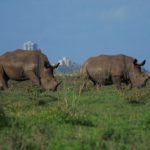
Inside the Park, you can view Nairobi City and its skyscrapers on the near horizon. To the south of the park are the Kitengela Conservation Area and Athi-Kapiti plains separated from the park by the Mbagathi River. This southern border of the park is not fenced to allow animals’ movement and migration. The other three park boundaries-northern, eastern, western boundaries are fenced.
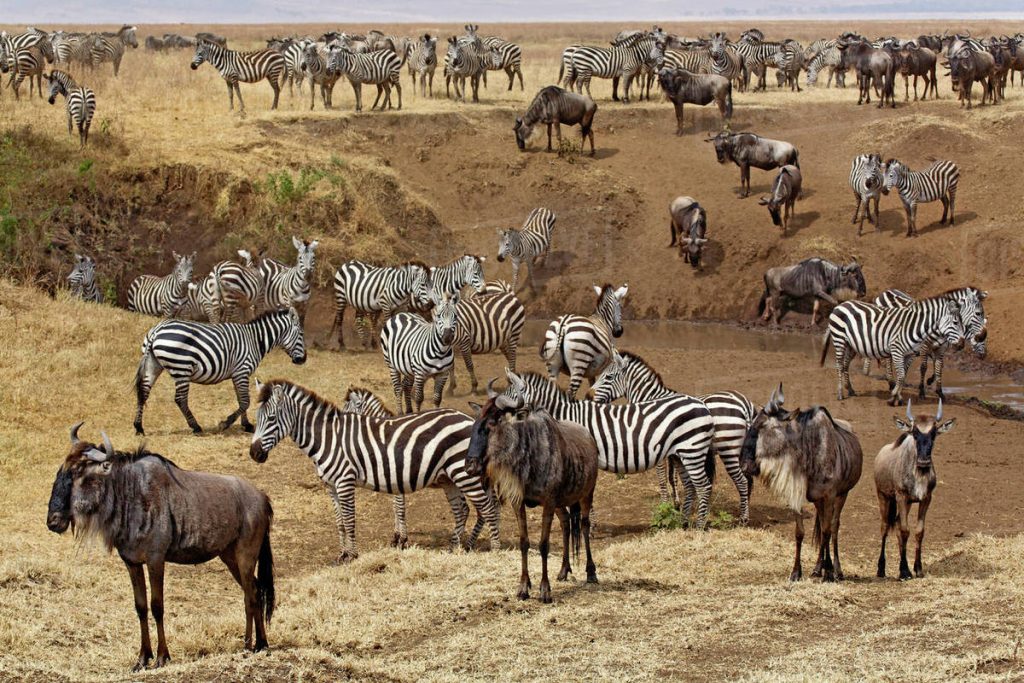
During the dry season, animals including the wildebeest and zebra migrate to the park through the Kitengela Conservation Area and migration corridor to the south of the park from the Athi-Kapiti plains. They migrate back to plains in the wet season. The migration happens in July and August.
Facts about Nairobi National Park
- The obvious –in the whole world, it is the only wildlife national park in the city. Nairobi Central Business District is nearby.
- It is home to the black rhinoceros; which is an endangered species
- Nairobi National Park is the first park to be gazetted in Kenya on December 16, 1946.
- The park has diverse birdlife –over 400 bird species are found here. At least 20 of which are seasonal European migrants
- It is a major rhino sanctuary for breeding and restocking other parks
- The park is home to over 100 species of mammals including the four of the Big-Five (lion, buffalo, leopard, and rhino)
- You will enjoy spectacular migration of wildebeest and zebra
- It is home to some of the large predators which include lion, leopard, hyena, and cheetah
- Aggregations of large herbivores can be spotted which include eland, buffalo, zebra, and wildebeest
- This wildlife park has walking trails at the hippos pools
- Ivory Burning Site Monument is here
- And so is Nairobi Safari Walk and the Nairobi Animal Orphanage
- And last but not least, you will enjoy spacious accommodating picnic sites
Nairobi National Park Animals
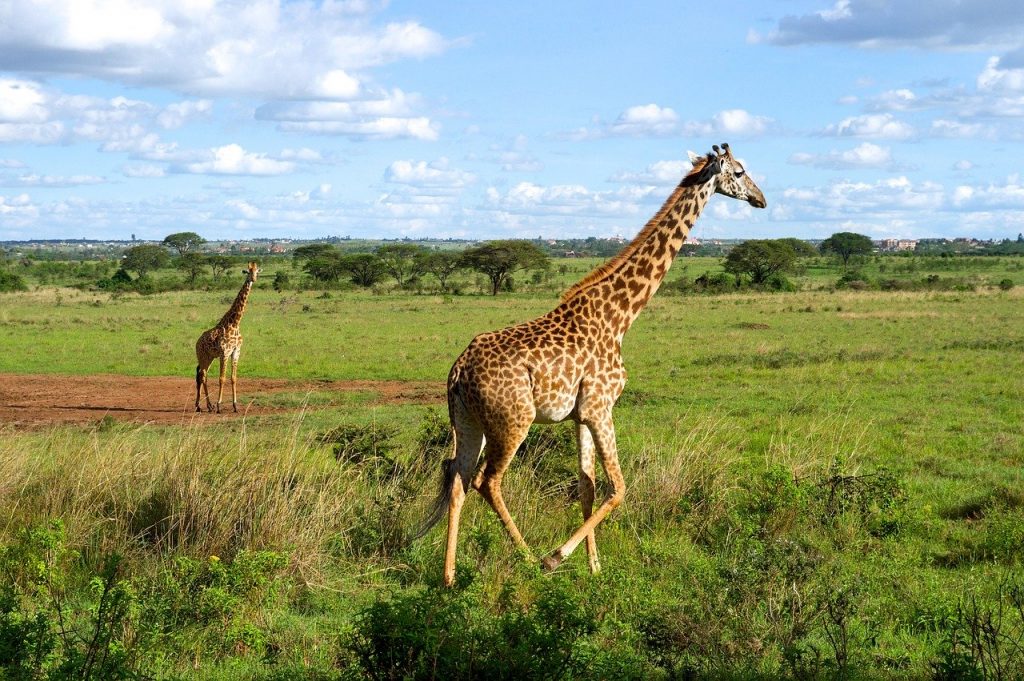
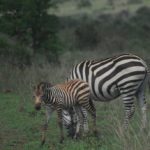
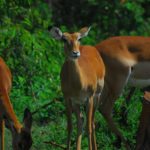
Nairobi National Park hosts a wide variety of wildlife. Most popular animals include; the Cape buffalo, lion, leopard, black rhino, Coke’s hartebeest, giraffe, zebra, eland, impala, waterbuck, baboon, cheetah, hippopotamus, wildebeest, and many others.
It has a variety of birds-over 500 species of birds on record, which include the vultures and ostriches. Some are migratory species while some are permanent.

Other Attractions in the Park
- Wildebeest and zebra migrations in July and August
- Nairobi Safari Walk
- Nairobi Animal Orphanage
- Ivory Burning Site Monument
- Camping sites -Kilimanjaro Annex, Isukuti, Treetop Hut, and Sirimon Cottages
- Picnic Sites
- The Rhino Sanctuary for breeding and restocking other animal parks
Things to do in the Park
You can participate in several activities inside the park, which include-
- Game viewing
- Camping
- Bush dinners
- Photography
- Weddings
- Picnics
- Corporate events and team buildings
Nairobi Weather & Climate
Nairobi has a warm and temperate climate.
The average annual temperature is 19°C. The warmest month of the year is March, with an average temperature of 21°C. The coldest month of the year is July, with an average temperature of 18°C.
The annual average rainfall is 869 mm. The wettest month of the year is April while July is the driest.
How to get to Nairobi National Park
By Road: The Park is 10 km from the city using the KWS Headquarters gate. You can use public means, hire a Taxi, or join a safari on hire.
By Air: Through the Jomo Kenyatta International Airport or Wilson Airport.
Park Contacts
Telephone: 020-2423423, 020-2587435
KWS Reservations Email: [email protected]
Inquiries Email: [email protected]
Nairobi National Park Accommodation
Accommodation is nothing to worry about here. You can choose any of the following hotels near Nairobi National Park.