Tsavo West National Park is in Taita Taveta County about 281 km from Nairobi and 206 km from Mombasa. It is under the management of the Kenya Wildlife Service.
It occupies a surface area of 9,065 km2. The park borders its sister national park, Tsavo East National Park and they are separated by the Nairobi-Mombasa Highway and Standard Gauge Railway. It also borders the Chyulu Hills National Park and Mkomazi Game Reserve in Tanzania.
Tsavo West National Park ecosystem consists of scrublands, acacia woodlands, rocky ridges, open grasslands, stretching riverine vegetation, mountains and hills, rivers, springs, and the tranquil Lake Jipe.
Mzima Springs found in the west of the park are a series of four natural springs with crystal clear water whose source is a natural reservoir under the Chyulu Hills to the north. It is home to significant populations of hippos and Nile crocodiles. This makes the springs a major source of tourist attraction in the park.

Lake Jipe is an inter-territorial lake lying on the Kenya-Tanzania border. It is mainly fed by the Lumi River and the lake outflow forms Ruvu River. The lake is known for its lake-edge swamps, wetland plants, mammals, water birds, and endemic fish.
This park is unique in its own ways. You will find lava flows, springs, man-eaters, and stunning sunsets. It is a popular tourist destination due to its stunning scenery, rhino sanctuary, good road network, rich wildlife, rock climbing, and guided nature walks.
Tsavo West National Park Attractions
- Stunning game viewing
- Stunning sunset viewing
- Mzima Springs, home to Nile crocodiles and hippos
- Volcanic formations
- The Ancient land of lions
- Visit Ngulia sanctuary (dedicated to conserving the endangered black rhino)
- Lake Jipe
- First World War Site
- Archaeological sites, that capture Early, Middle and Late Stone Age
Tsavo West National Park Animals

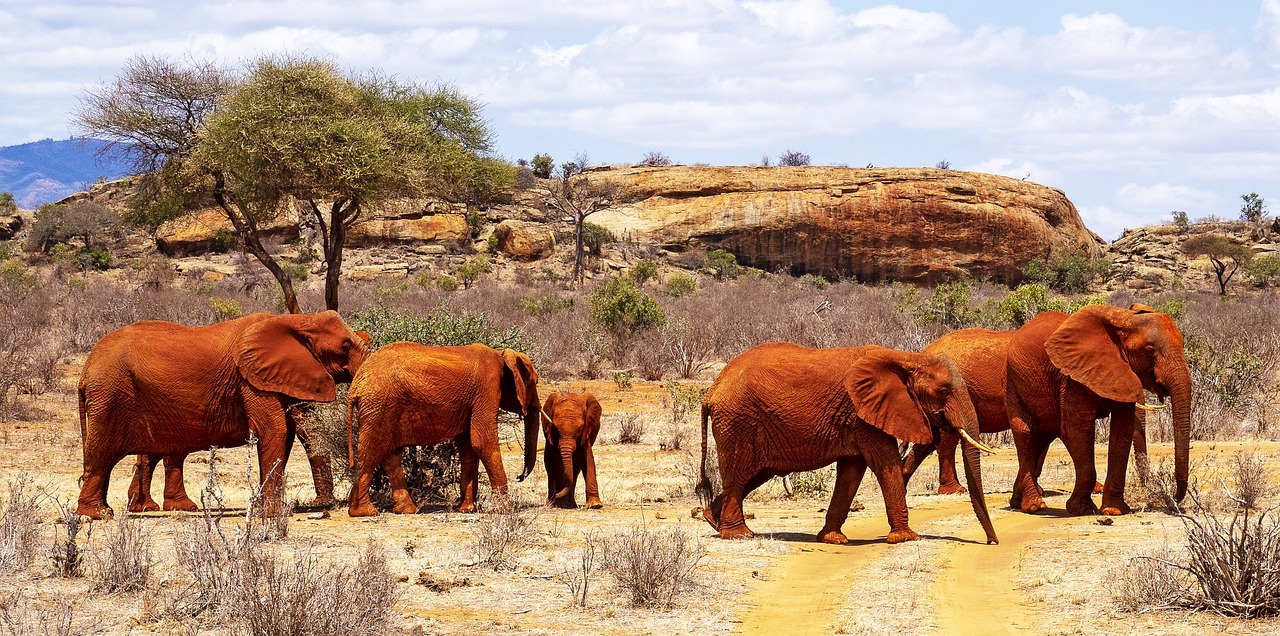
Wildlife consists of Buffalo, Elephant, Hippo, Rhino, Giraffe, Zebra, Mongoose, Lesser Kudu, Dik-Dik, Hyrax, Nocturnal Porcupine, Lion, Leopard, Cheetah, Wild dogs, and Crocodile.
Birdlife is abundant here-over 600 species on record
Tsavo West National Park Climate
The park climate is warm and dry.
This area has two rainy seasons. The long rains experienced between March and April and short rains between November and December.
Temperatures are about 25°C on average.
When to Visit
You can visit Tsavo East National Park all year round avoiding rainfall peak months-April and November-when trails are not dependable.
Things to do in Tsavo West National Park
You can participate in a number of activities:-
- Game viewing, rich and varied wildlife
- Rock climbing
- Cave exploration
- Walking safaris
- Nature walks, along the Tsavo River
- Bird watching around Lake Jipe
Travel Tips
Don’t forget to carry your sunscreen, hat, sunglasses and drinking water. It is hot here and you will be facing direct sunlight. If you will be camping, please carry camping equipment and picnic items.
To make this wildlife safari memorable put your camera and binoculars in the bag.
How to get here
By road
Use Mtito Andei Gate if from Nairobi or Chyulu Gate if from Amboseli or Tsavo Gate near Manyani if travelling from Mombasa
By air
Use Maktau, Ziwani, Kilanguni, Kamboyo, and Kilanguni airstrips
Tsavo West National Park Entrance Fees
The park Charges are as follows;
Citizen (KES): Adult 515, Child 215
Residents (KES): Adult 1,030, Child 515
Non-resident ($): Adult 52, Child 35
Tsavo West National Park Accommodation
Popular Tsavo West Hotels and Lodges include;
- Severin Safari Camp
- Man-Eaters Camp
- Kilaguni Serena Safari Lodge
- Sarova Salt Lick Game Lodge
- Voyager Ziwani Camp
- Severin Kitani Bandas
- Hunters Lodge
- H12 Kipalo Hills
- Voi Wildlife Lodge
- Manyatta Camp
- Afrika Lodges
- Voi Lutheran Guest House
Happy wildlife visit!
See also Tsavo East National Park